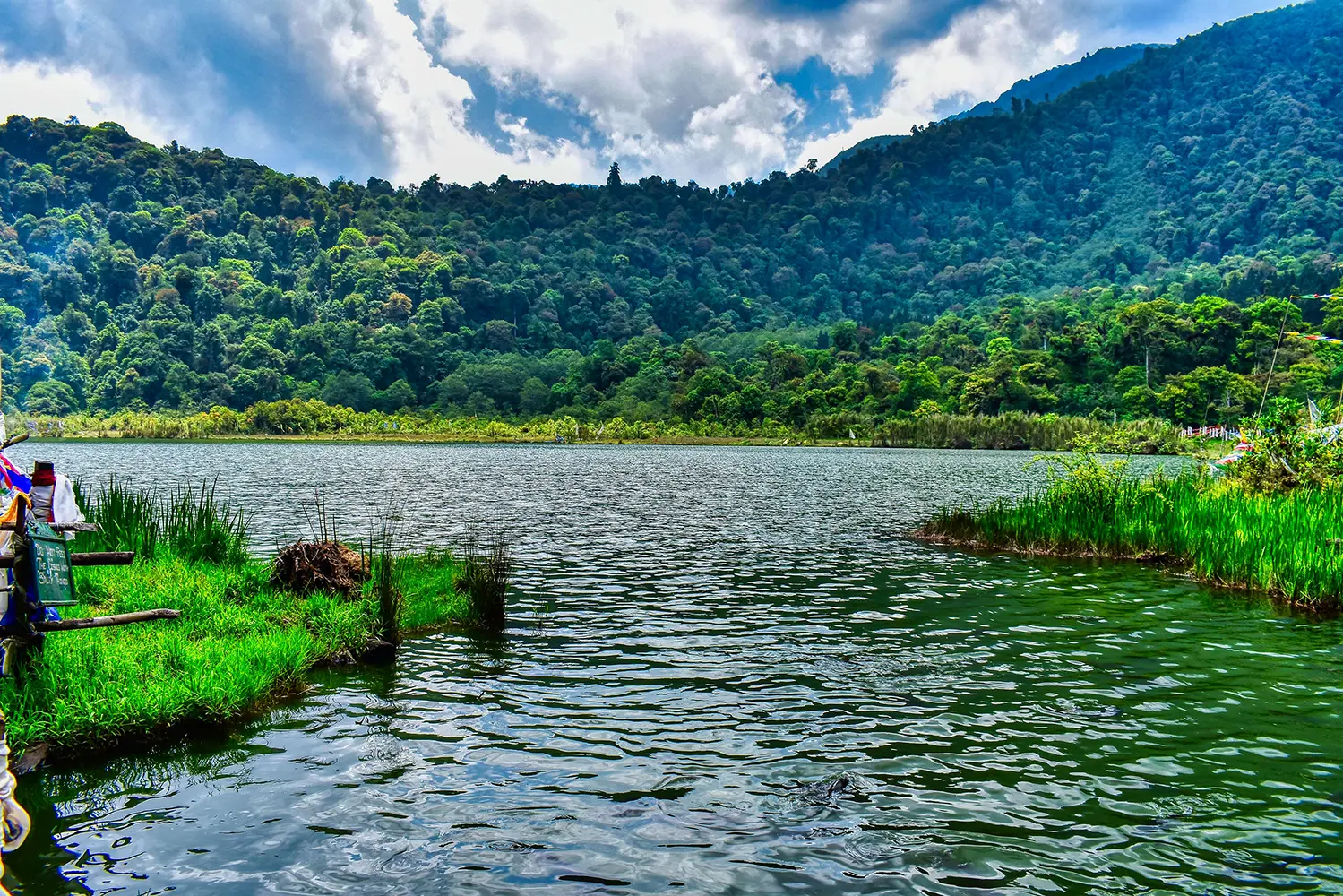
There’s a lake in West Sikkim where leaves never touch the water. Not because of some elaborate cleaning system, but because birds, faithful guardians of this sacred place, pick them up before they can settle on the surface. Local people will tell you this with absolute certainty, and after you visit, you might just believe them too.
Welcome to Khecheopalri Lake, also spelled Khechuperi Lake. This is not just a water body. It is the heart of West Sikkim and one of the most profound spiritual sites in the Himalayas. Whether you are a pilgrim seeking a miracle or a traveler hunting for silence, this “Wish-Fulfilling Lake” offers an experience that stays with you long after you leave.
This guide covers everything you need to know to visit this mystical sanctuary, from the legends that define it to the practical tips that will make your journey smooth.
The Myth and The Magic: Why is it Sacred?
Khecheopalri is revered by both Buddhists and Hindus, making it a unique convergence of faith. The name itself translates roughly to “The Mountain of Blissful Heaven,” and the local atmosphere certainly lives up to the title.
The Footprint of the Divine
If you view the lake from the surrounding hills, its shape closely resembles a giant footprint.
- For Buddhists: It is believed to be the footprint of Goddess Tara, the “Mother of Liberation.”
- For Hindus: It is revered as the footprint of Lord Shiva, who is said to have meditated in the Dupukney Cave located just above the lake.
The Heart of Demazong
To understand the true importance of Khecheopalri, you have to look at the bigger picture of Sikkim. In ancient texts, Sikkim is often referred to as Demazong, or the Valley of Rice. The entire landscape is conceptualized as a human body.
- Tashiding Monastery represents the head plexus.
- Yuksom represents the third eye.
- Khecheopalri Lake represents the thorax, or the chest, housing the heart.
This is why locals treat the lake with such intense reverence. You are not just visiting a tourist spot. You are stepping into the heart of the land itself.
The Experience: What to Expect
The journey to the lake is as beautiful as the destination. The lake sits at an altitude of approximately 1,700 meters (5,600 feet), tucked away near the village of Khecheopalri.
The Walk of Peace
Your vehicle will drop you off at the parking area. From there, you walk through a beautiful wooden entrance gate. The path to the lake is lined with prayer wheels and fluttering prayer flags. The sound of the wind snapping the flags and the low hum of chanting from nearby pilgrims sets a meditative tone immediately.
As you approach the water, you will see a wooden jetty extending into the lake. Visitors are required to take off their shoes before stepping onto this jetty. Walking barefoot on the wood, with the cool air of the forest around you, grounds you in the moment.
Feeding the Fish
The water is teeming with fish. Since fishing is strictly prohibited in this sacred space, the fish have grown large and fearless. You can buy puffed rice or biscuits from local vendors at the entrance to feed them. Watching the water churn with life as you toss a handful of food is a simple joy that connects you to the thriving ecosystem of the lake.
The Viewpoint Trek: Seeing the Footprint
Most tourists stop at the jetty, but they miss the most spectacular view. To see the famous “footprint” shape, you need to hike up to the viewpoint.
- Difficulty: Moderate. It is a steep uphill climb.
- Duration: About 20 to 30 minutes one way.
- The Path: The trail starts near the lake entrance. It is a dirt path that winds up the hill through the forest.
- The Reward: At the top, you get a panoramic view of the lake below. From this height, the contours of the footprint are unmistakable. It is the best spot for photography and offers a vantage point that truly captures the scale of the landscape.
Best Time to Visit Khecheopalri Lake
The lake is accessible year-round, but your experience will change with the seasons.
Autumn and Winter (October to February)
This is arguably the best time for clear views. The skies are blue, and the weather is crisp.
- Temperature: It can drop to 4 degrees Celsius or lower, so heavy woolens are necessary.
- Visibility: Excellent. You might even catch glimpses of Mount Kanchenjunga on the drive there.
Spring (March to May)
The forest comes alive during spring. The rhododendrons bloom, painting the hills in shades of red and pink. The weather is pleasant, making the trek to the viewpoint much easier.
Monsoon (July to September)
The rain transforms the forest into a lush, vibrant green paradise. However, the roads to West Sikkim can be tricky due to landslides, and leeches are common on the walking trails. If you visit during the monsoon, wear good boots and carry salt or salt water for the leeches.
Religious Festivals
If you want to witness the cultural vibrancy of Sikkim, plan your trip during:
- Maghe Purne (January/February): A massive fair is held here. Pilgrims from Nepal, Bhutan, and all over India come to float butter lamps on the lake.
- Chho-Tsho (October): A harvest festival where locals offer their first produce to the lake deity.
Visit Khechoperi Bamboo House
While you’re exploring this beautiful region, make sure to stop by Khechoperi Bamboo House in nearby Thingling village. Located at the foothills of Mount Khanchendzonga, our workshop preserves the traditional bamboo and wooden crafts of Sikkim.
Watch master artisan Shri Indra Kari Subba create authentic Sikkimese handicrafts using techniques passed down through generations. From traditional Theki and Dungroo to modern bamboo water bottles and the G20 Summit-featured wooden mugs, each piece tells a story of Sikkim’s rich heritage.
We’re open to visitors who want to see traditional craftsmanship in action, learn about bamboo craft techniques, or take home genuine handicrafts of Sikkim. Support local artisans and carry home a piece of authentic Sikkimese culture.
How to Reach Khecheopalri Lake
The lake is located in West Sikkim, well-connected to the major tourist hub of Pelling.
- From Pelling: The distance is about 34 kilometers. It takes roughly one hour by taxi. The drive is scenic, passing through the Rimbi Waterfall and Kanchenjunga Waterfalls.
- From Yuksom : The distance from Yuksom to Khecheopalri Lake (also spelled Khecheopalri Lake) is approximately 26-27 km by road. Travel typically takes about 45-50 minutes by vehicle, though trekking options exist taking 4-5 hours one way.
- From Gangtok: It is a long journey of about 150 kilometers, which takes 6 to 7 hours. It is best to stay in Pelling or Yuksom rather than trying to do a day trip from Gangtok.
- By Air: The nearest airport is Bagdogra (IXB) in West Bengal, about 160 kilometers away.
- By Train: The nearest major railway station is New Jalpaiguri (NJP), roughly 155 kilometers away.
Essential Travel Tips and Etiquette
Because Khechuperi Lake is a sacred site, there are specific rules and customs you should follow to show respect.
- Maintain Silence: This is a place of meditation. Avoid playing loud music or shouting.
- No Shoes on the Jetty: You must remove your footwear before walking on the wooden platform leading to the water.
- Do Not Pollute: This goes without saying, but it is strictly enforced here. Do not throw plastic or wrappers anywhere. The legend of the birds keeping the lake clean is a reminder of how pristine this place should be.
- Prayer Wheels: Always spin the prayer wheels in a clockwise direction with your right hand.
- Carry Cash: The small shops and entry counters do not accept digital payments or cards. Carry small denomination notes for the entry fee (usually around 30 INR) and fish food.
Where to Stay
While most people stay in Pelling, which offers luxury hotels and views of Kanchenjunga, adventurous travelers can choose to stay in Khecheopalri Village. There are a few homestays and a Trekker’s Hut available. Staying here allows you to experience the lake early in the morning or late at evening when the day tourists have left, offering a solitude that is hard to find elsewhere.
Final Thoughts
A visit to Khecheopalri Lake is more than just a sightseeing stop. It is a brush with the ancient mysteries of the Himalayas. Whether you hike up to see the footprint or simply sit by the water watching the prayer flags flutter, you will feel the deep, rhythmic pulse of nature and faith.
So, when you stand before the water, close your eyes. Make a wish. In a place where birds clean the water and the land is shaped like a god, anything seems possible.